
A finished basement advertised as a “legal apartment” raises a practical document question: what do the Town and ESA records show for this address and current layout? A buyer should not infer approval from a tenant, a separate entrance or a polished kitchen. Milton’s current ARU registry applies to existing units, and building and electrical approval paths remain separate. This guide lists useful questions for a property review. It is not legal, real-estate, investment or home-inspection advice; obtain appropriate professional and municipal verification for the transaction.
Ask what “legal” is meant to describe
A listing may use “legal basement,” “in-law suite,” “finished basement” or “secondary unit” loosely. Clarify whether the seller means the space was finished under a permit, approved as an additional dwelling, registered as a current ARU, or merely used separately. These are distinct claims. Obtain copies of actual documents and compare them to the current room arrangement. A certificate or permit for an older layout may not answer whether later changes were approved.
Check municipal building history
Ask for the building permit number, approved drawings, revision history and final inspection status for the apartment, kitchen, entrance and any new windows. A permit for general basement finishing is not necessarily approval of a separate unit. If documents are unavailable, ask the Town about its records and the appropriate property-information process. Review whether the number of bedrooms and location of the kitchen and bathroom match what was permitted. Do not assume the absence of paperwork proves a particular defect, but do not treat a seller’s assurance as a substitute.
Check Milton ARU registration
Milton currently requires all new and existing ARUs to register, including family-occupied and non-rental units. Ask for the registration record and current one-year compliance certificate, not just evidence that an application was started. Annual renewal is required. A building permit does not automatically register an ARU. If the certificate has expired or the layout changed after registration, ask the Town what is needed to restore or update the record. The registry’s emergency-response purpose makes the current unit configuration important.
Ask about ESA electrical records
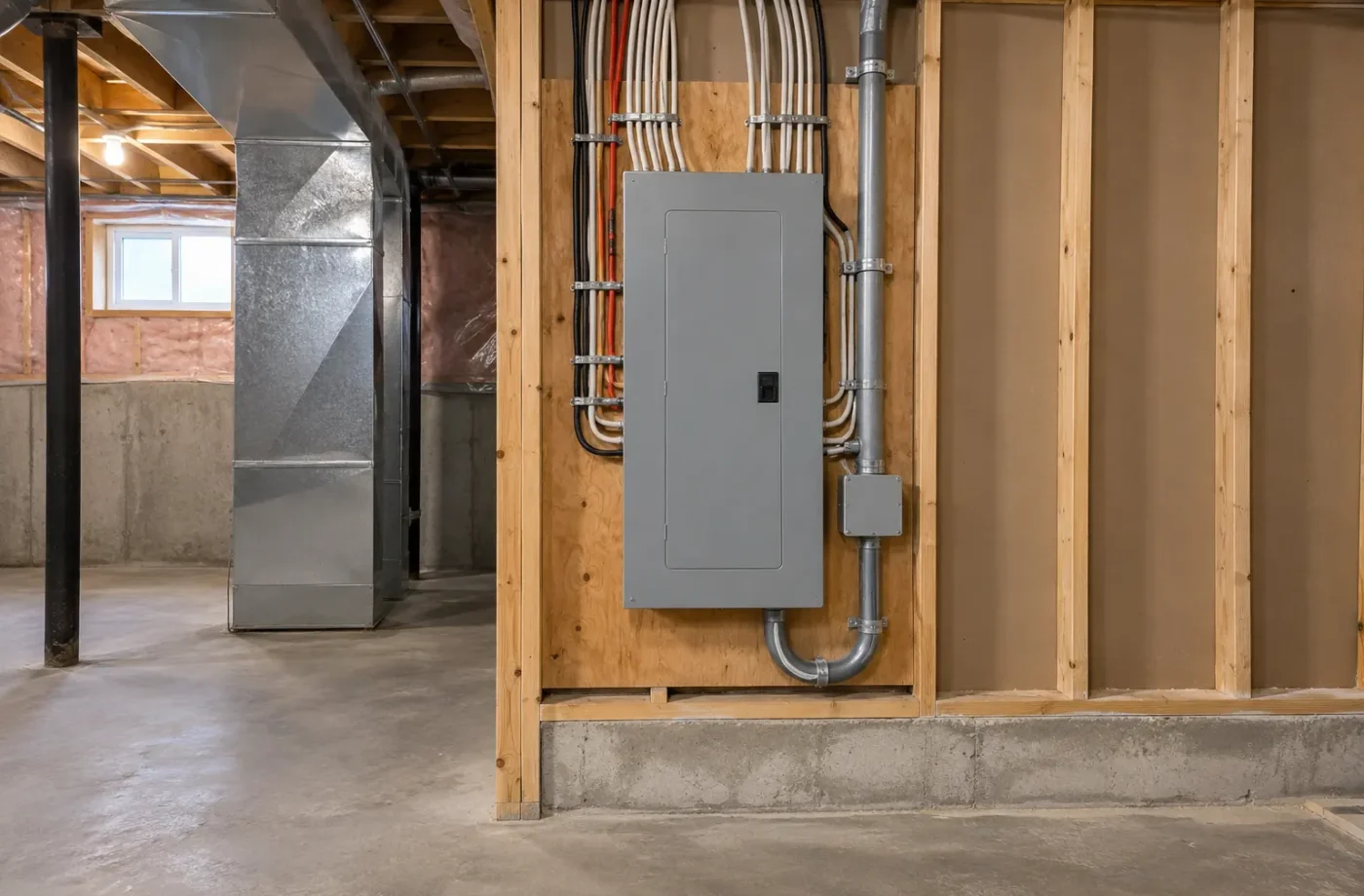
Request the electrical notification and Certificate of Acceptance for basement wiring changes. ESA states that a municipal building permit is not an ESA notification. A certificate has a scope and date; compare it with visible renovation work and ask what later changes were made. ESA offers official record-search channels. An inspection report or contractor invoice can be useful context, but should not be described as an ESA acceptance document unless it actually is one.
Observe the entrance and site
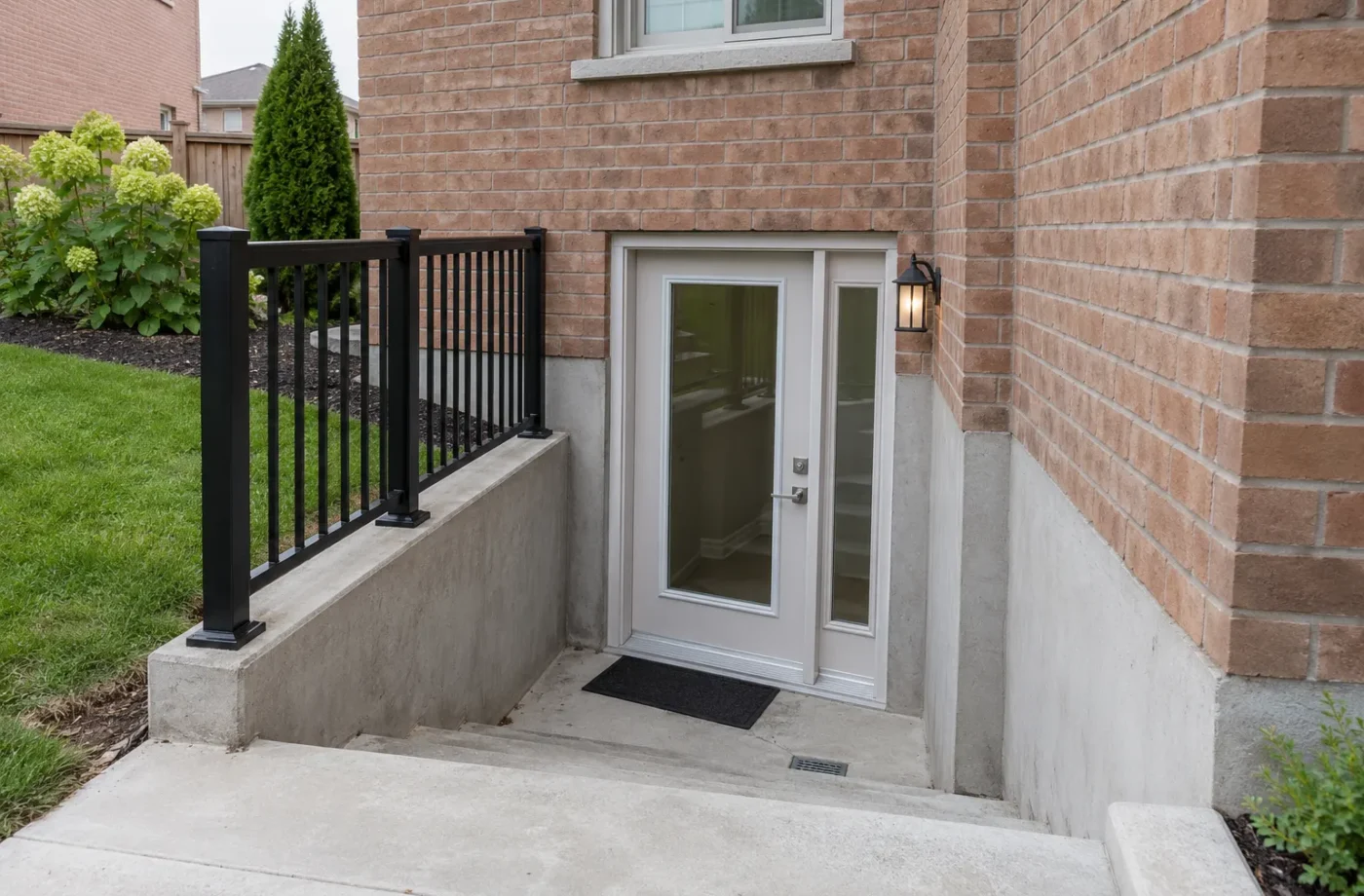
Note how the occupant reaches the unit, whether the entrance is side or rear, and whether stairs, wells, drainage and routes appear to have changed. Ask for permits for new exterior doors and windows; Milton requires them. The zoning and parking rules applicable to this lot also deserve review, especially if other units or detached structures exist. An attractive side door can still be associated with unresolved setback, drainage or permit questions. A qualified inspection can investigate physical condition while the Town addresses approval records.
Compare rooms with drawings
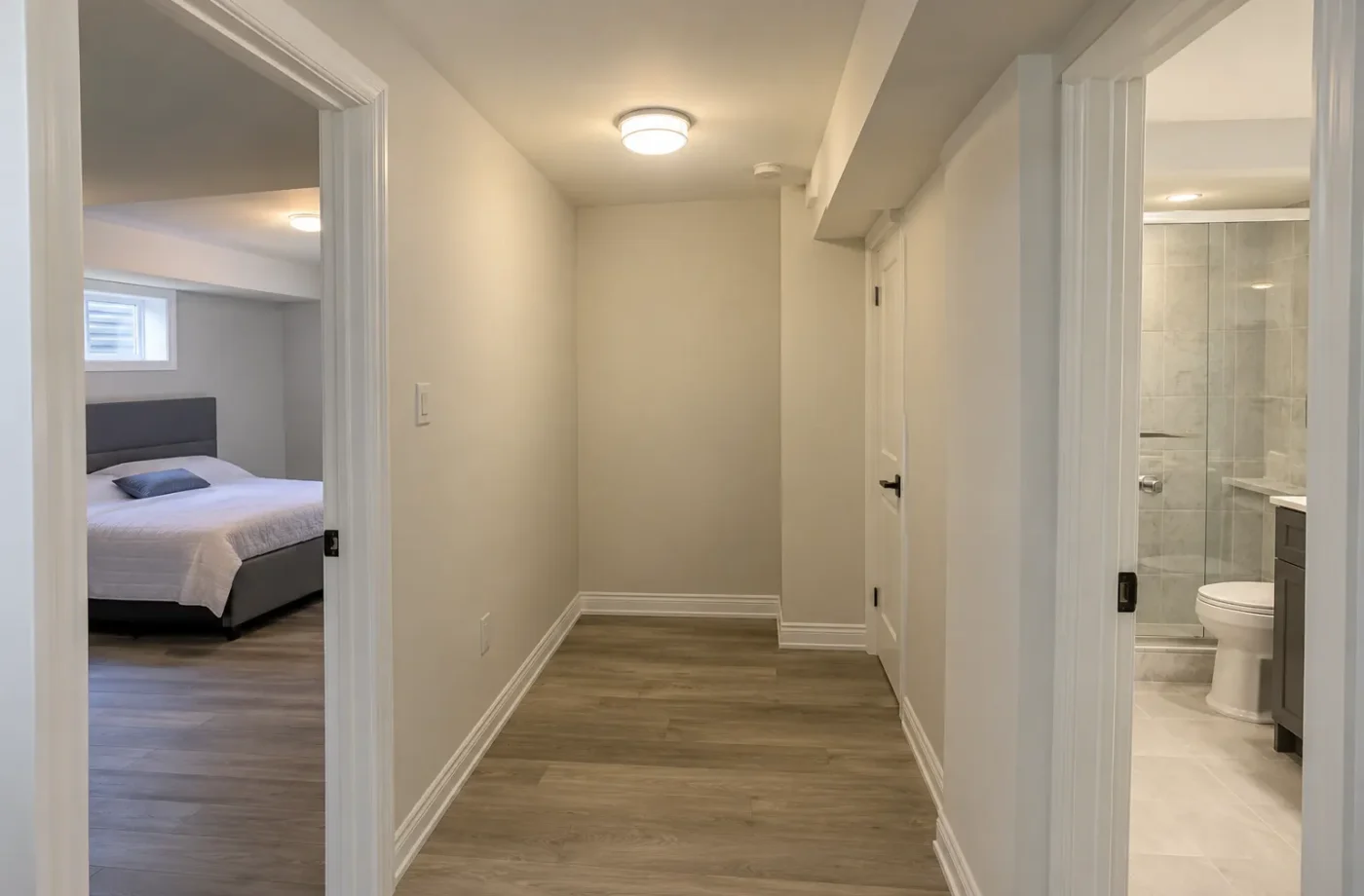
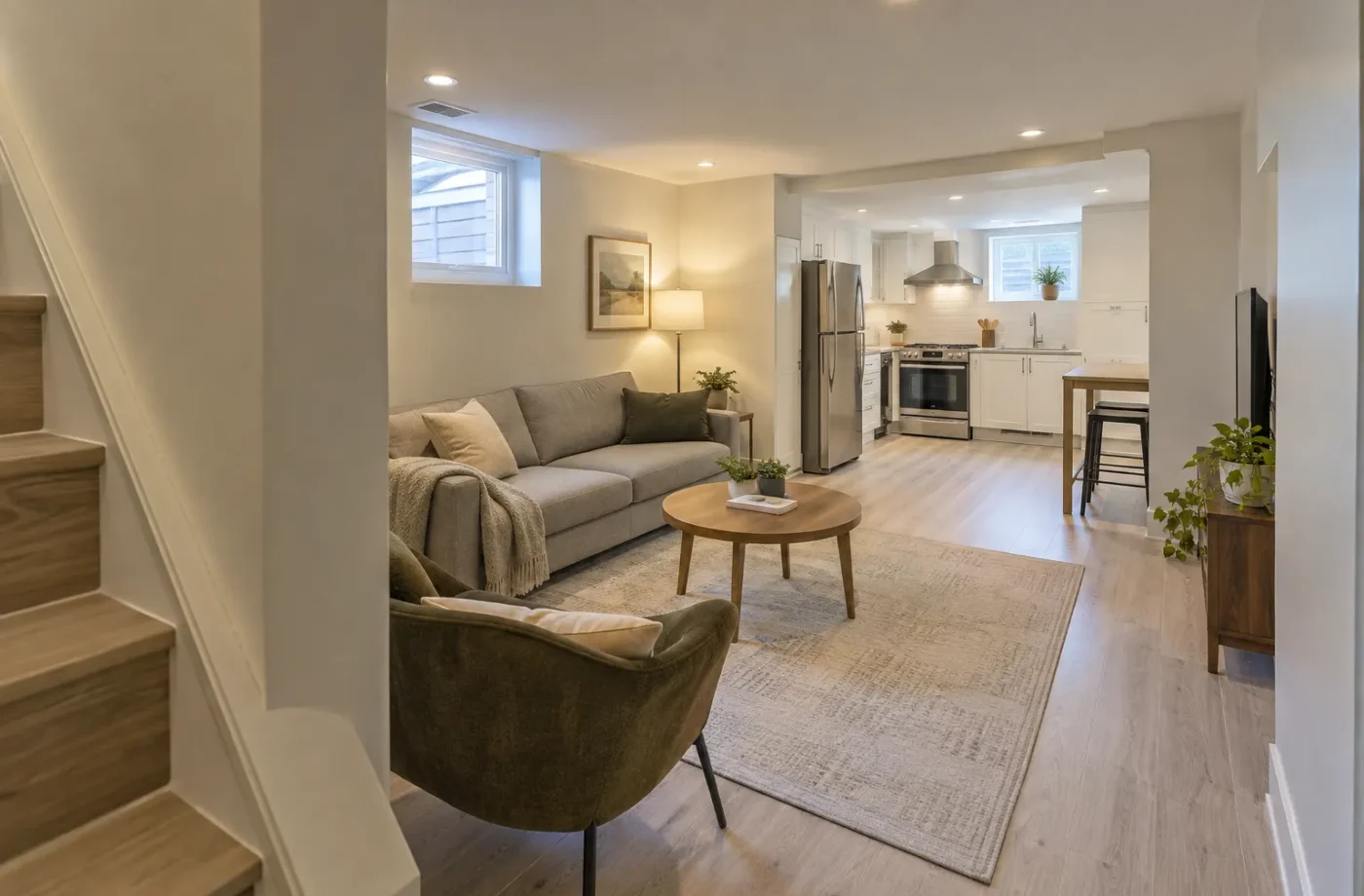
Record the actual kitchen, bathrooms, bedrooms, living areas, laundry and service rooms. Look for changes to walls, doors, windows or mechanical access that might postdate drawings. Do not declare a room compliant because it contains a bed, or a unit approved because it is occupied. The review should identify what is visible and which hidden assemblies cannot be assessed without opening. Sound and fire separation, alarms and plumbing may need qualified evaluation beyond a casual walkthrough.
Rental history does not settle compliance
The existence of a lease, rent payments or long-term occupancy can be important transaction information, but none replaces municipal and ESA records. If the unit is occupied, access and timing of any assessment or corrective work need careful coordination. Seek legal and real-estate advice about contractual and tenancy implications rather than treating a renovation contractor’s preliminary assessment as a legal opinion. The cost and schedule of potential legalization should be based on documented conditions and remaining unknowns.
Budget uncertainty explicitly
A simple cosmetic update and a legalization project can have very different scopes. If records are incomplete, allow for professional measurement, drawings, selective opening and possible corrective construction. Foundation entrance work, window changes, plumbing, HVAC, fire separation and electrical work can dominate a budget. It is better to identify unresolved questions than to attach a confident fixed number before access and documentation exist. Read new construction versus legalization and cost factors for a scope framework.
Organize a property-specific review
Create one folder for seller documents, Town records, ESA records, photographs, a measured plan and written questions. Ask the Town about registration and permit status through its official channels. Engage the relevant legal, real-estate, inspection and design professionals for questions in their scope. If the purchase proceeds and work is needed, an existing basement assessment can turn uncertainty into an investigation plan. The goal is to understand what is documented, what can be observed and what still needs verification before relying on the unit’s proposed use.
Request records early enough to use them
If a basement apartment materially affects a purchase decision, ask for documents during the property review period established with your real-estate and legal advisers. A seller may need time to locate old plans or Town correspondence. Separate documents actually received from those promised. Read permit scope and dates rather than relying on a folder labeled “legal suite.” The transaction’s legal handling is for the appropriate professionals; the construction assessment can identify technical questions to verify.
Distinguish visible condition from approved status
A home inspector can observe moisture, outlets, windows, stairs and accessible mechanical equipment. A designer can compare layout and potential corrective work. The Town has the municipal permit and ARU registry records; ESA has electrical notification records. No single walkthrough replaces all of those sources. Organize findings under physical condition, municipal building history, ESA history and current registration. This makes gaps visible without allowing one favourable observation to answer an unrelated question.
Look for alterations after approval
A permit may have been finalized before a kitchen was added, a bedroom wall moved or a new side door installed. Compare dated drawings and certificates with the current plan. Ask the seller about later work and seek its records. An annual ARU certificate also includes owner confirmation about changes, so an altered unit may need the Town’s direction before renewal. The goal is not to accuse a seller of wrongdoing; it is to understand which version of the basement the paperwork describes.
Avoid a false yes-or-no cost estimate
A basement with missing papers may require a records search and modest corrections, or it may have concealed issues that change the layout and budget. Neither conclusion follows from the listing photographs. If the unit’s status is important, identify the questions that must be answered before relying on a rental-use assumption. A construction estimate can state known work and contingent investigation; legal and financial consequences belong with the buyer’s advisers.
Keep a post-purchase plan if work is needed
If the transaction proceeds with outstanding questions, maintain a dated file of documents and decisions. Confirm the current intended use and ask the Town about approvals and registration. Arrange targeted professional review before cosmetic renovation hides evidence. If the unit is occupied, coordinate access and obligations through appropriate advisers. A staged plan can address immediate safety concerns, design and permit work, ESA questions and ARU registry status without pretending that one contractor visit closes every issue.
Questions worth putting in writing
Ask what building permit approved the current separate dwelling, whether the final inspection was completed, what exterior-opening permits exist, and whether the Town’s ARU compliance certificate is current. Ask which electrical work has an ESA Certificate of Acceptance and whether later alterations occurred. Request drawings that match the actual kitchen, bedrooms and entrance. If the answers are incomplete, identify the likely professional investigation and potential corrective scope before assuming the apartment can be used as advertised. Consult legal and real-estate advisers about the transaction; a construction firm can assess physical work but should not offer legal or investment conclusions. The aim is a well-documented decision, not a generic statement that every older basement apartment is either safe or unfixable.
Common questions
Does a tenant prove the basement apartment is registered?
No. Ask for the Town’s current ARU registration and compliance record.
Is a building permit enough to verify electrical work?
No. ESA notification and acceptance are separate records.
Can a contractor certify an older unit legal from a walkthrough?
A visual review cannot establish the full permit, electrical and registration history or hidden construction.